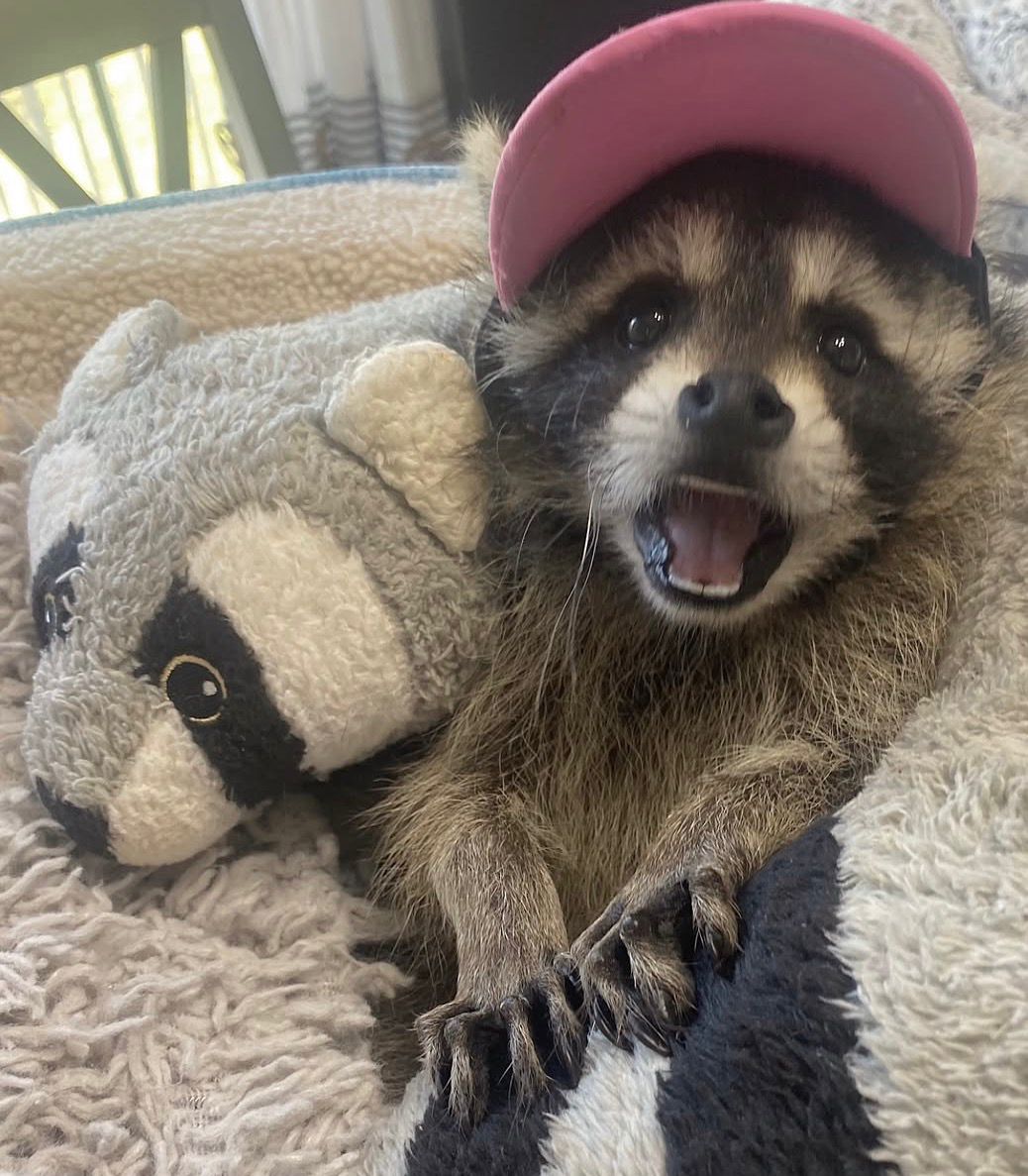
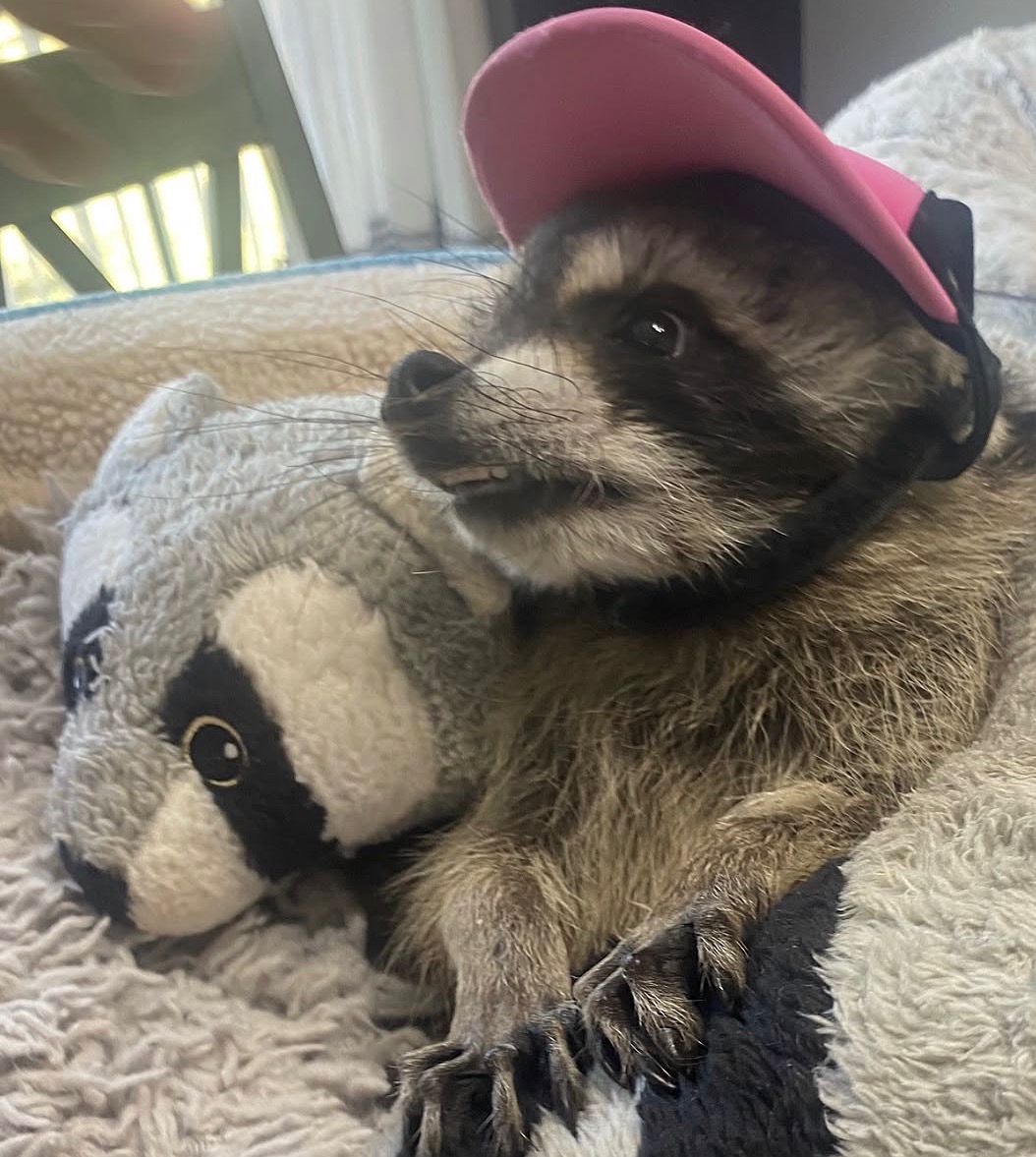
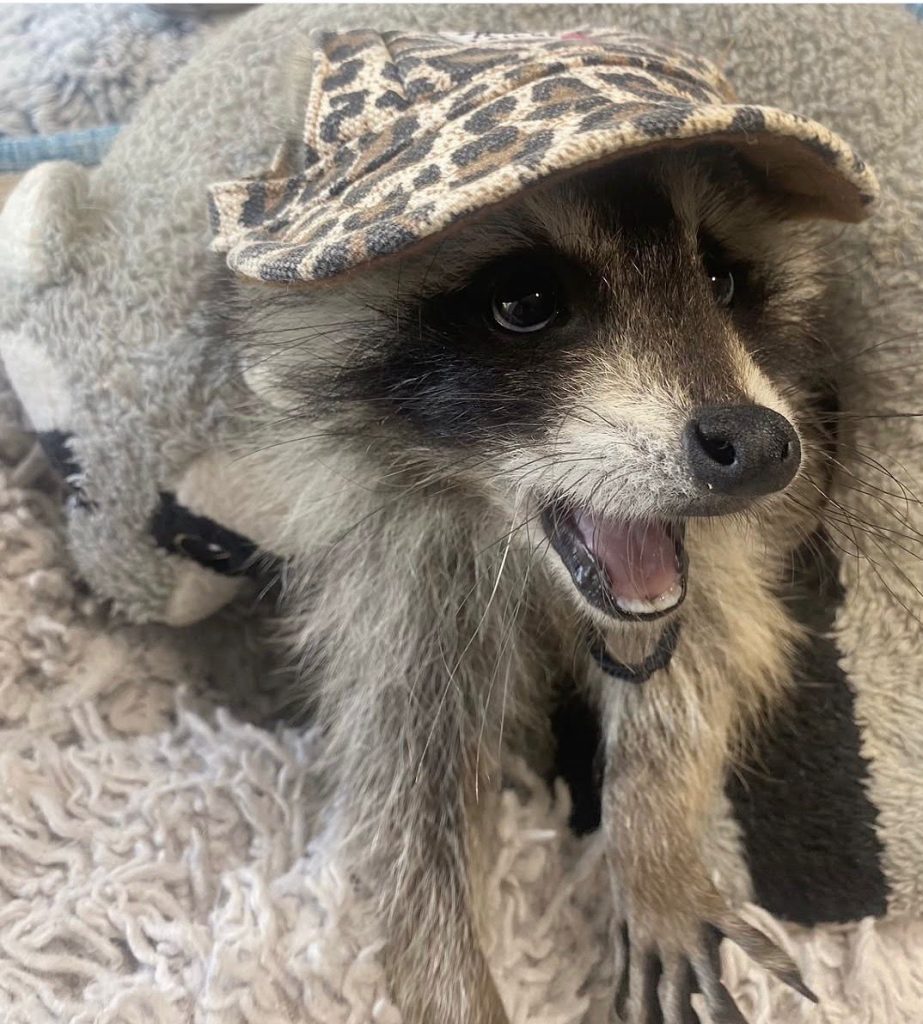
Domesticated raccoon for sale. The raccoon is the largest member of the Procyon family found naturally in North America and Canada. However, they have rapidly spread throughout and are now classed as an invasive species because of their impact on native ecosystems. Three of the raccoon’s most distinctive features are its extremely dexterous front paws, its facial mask, and its ringed tail.
Appearance: Grey furry animal about the size of a large cat, distinctive dark eye-patches with thick bushy tail with a series of black rings.
Behaviour: Like to feed in water or to douse their food in water before eating, are able to swim.
Biology: Produce 2 – 5 young in early spring.
Diet: Fruits and berries, insects, crustaceans, birds, eggs, small rodents and reptiles. Can raid bins in urban environments.
Impact: Can threaten vulnerable bird species and displace native carnivores. Can interfere with game management and can damage growing and stored grain. Also, they May carry harmful diseases such including rabies (if animals have been imported), canine distemper, toxoplasmosis and a roundworm parasite that is highly pathogenic in humans.
Pathway: May have escaped or been deliberately released into the wild.
Raccoons Are Showing Early Signs of Domestication
City-dwelling raccoons seem to be evolving a shorter snout—a telltale feature of our pets and other domesticated animals
With their nimble, childlike paws and cheeky “masks,” raccoons are the ubiquitous garden raiders of North America. The animals are so comfortable in human environments that a new study shows raccoons in urban areas are undergoing physical changes in response to living alongside humans—an early step in domestication.
To begin, The study argues that the domestication process is often mistakenly thought of as being initiated by humans—through the capture and selective breeding of wild animals. However, the study authors claim that the process begins much earlier, as the animals become accustomed to the human environment.
“One thing is clear: We humans produce a lot of trash wherever we go,” says Raffaela Lesch. She is a biologist at the University of Arkansas at Little Rock and a co-author of the study. Also, Mountains of human waste provide an inexhaustible buffet for wild animals. Also, To get to these delicacies, the animals must be bold enough to rummage through the garbage, but not so bold as to pose a danger to humans. “If you have an animal that lives near people, you have to behave quite well,” says Lesch. “The selection pressure is quite high.”








Reviews
There are no reviews yet.