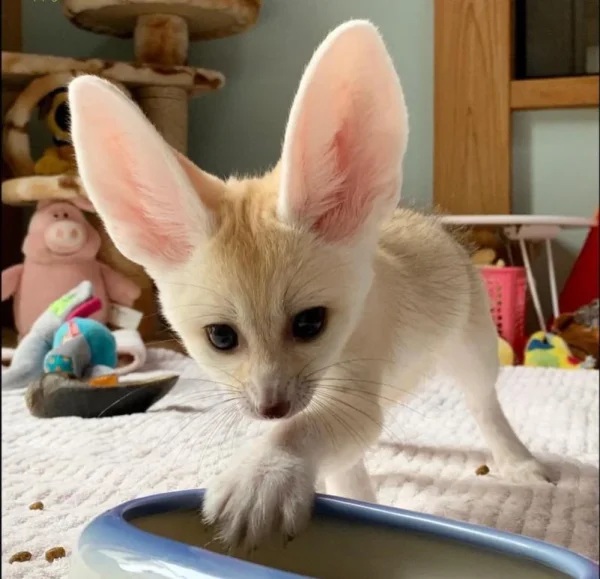
Fennec Fox
Buy a Fennec Fox
Buy a Fennec Fox. Fennecs, even those bred as pets, are high energy nocturnal animals that can be flighty, skittish and shy. Sudden noises or unexpected movements can put them on high alert and make these little guys extremely nervous.
5 Facts About Fennec Foxes
1. They are the worlds smallest fox
The average fennec fox is only about 8 inches tall and weighs merely 2 to 3 pounds. That is shorter than the average house cat and a fraction of the weight.
2. They have diverse social lives
They tend to live in tight-knit families of up to 10 foxes, but the size varies depending on the availability of food in the area.
3. Fennec foxes have adapted to limited water
These furry creatures live in the desert, meaning they have adapted over time to accommodate for the scarcity of water. They stay hydrated in the heat just by eating leaves, roots, and fruits.
4. It has multipurpose ears
Not only do they have the largest ears relative to body size of any canid, but their ears also help listen to prey underground as well as keep them cool as they lose a lot of heat through their ears.
5. They have extra fur on their feet
The hot sand of the desert could prove to be a challenge for mammals, but not the fennec fox. The fur on their feet helps keep their feet cool during the day, and conversely, helps insulate and keep their feet warm when the temperature plummets at night.
How to care for a Fennec Fox?
Exercise and Activity
Fennecs are quick, agile and active animals that require a lot of exercise. Given time and patience, fennecs can be trained to walk outdoors on leash.
Due to their energetic nature, allowing your fennec space to play inside your home will be key to keeping a fennec as an indoor pet. The carefree and playful nature of a fennex can result in broken items in your home. Be sure to clear the area and put away breakable items that your fennec can reach.
Vigilant supervision is required when allowing your fennec to run freely.
Outdoor Enclosure
If you live in a warmer climate, a large outdoor enclosure could be an ideal way to shelter your fennec and provide ample room for exercise. An outdoor enclosure should include logs to climb and places to hide and provide plenty of room for your fennec to run and play.
Keep in mind that fennecs are capable of digging deep holes and can easily tunnel out of your yard within a very brief period of time. They are also agile climbers and capable of a quick escape over the top of most fences. To prevent escape you may want to keep your fennec on a harness and leash while unsupervised.
Fennecs are a desert animal and as such need to be kept warm. They should only be kept outdoors in areas that do not go below 68 degrees Fahrenheit.
Indoor Enclosure
Fennecs require large amounts of exercise and should not be caged indoors all day. To keep your fennec housed indoors you will need a large enclosure for times when your pet cannot be supervised. You can create a larger sized cage for your fennec by joining multiple cages together to create multi-layers or a long play area.
When your fennec is released from the cage, you will need to tolerate quick bursts of energy and allow your pet to run and jump around your house to expend their pent-up energy.
In some cases, with a lot of positive reinforcement training and encouragement fennecs can be taught to use a litter box. Because they have a tendency to dig you may want to use a covered box.
Food & Water
In the wild, fennecs eat a varied diet of meat and plants, including fruit, insects, rodents, and birds. Most pet owners feed their fennecs a mix of cat food, dog food, vegetables, and fruit.
Fennec foxes require an adequate amount of taurine, an amino acid that’s essential for many metabolic processes in the body. Consult your veterinarian on the right quantity and variety of food for your fennec pet.